Africa Open University Co-Convenes International Dialogue on the Digital Future of Cultural and Arts Education in Africa
Africa Open University (AOU) co-convened the international dialogue “UNESCO International Arts Education Week in Africa” during UNESCO Culture and Arts Education Week (25–31 May 2026) under the theme “Openness · Heritage · Innovation: The Digital Future of Cultural and Arts Education in Africa.” The event brought together scholars, educators, cultural practitioners, youth representatives, and institutional partners to discuss how Open Educational Resources, digital innovation, and international cooperation can support cultural and arts education in Africa. Speakers from Liberia, Ghana, Kenya, China, and other regions emphasized the importance of preserving African cultural heritage, strengthening youth participation, and using technology responsibly to support inclusive and sustainable education.
Monrovia / Online, 27 May 2026 — Africa Open University (AOU) co-convened the international dialogue “UNESCO International Arts Education Week in Africa” during UNESCO Culture and Arts Education Week (25–31 May 2026) , under the theme “Openness · Heritage · Innovation: The Digital Future of Cultural and Arts Education in Africa.”
The event was jointly organized by Africa Open University (AOU) , the Liberia Academy of Sciences (LAS) , the Global Youth Dialogue Among Civilizations Alliance (GYDCA), and the International Academic Organizations Alliance (IAOA), with support and collaboration from the Liberian National Commission for UNESCO, the College of Engineering of China Agricultural University, and Beijing Talent Technology Co., Ltd.
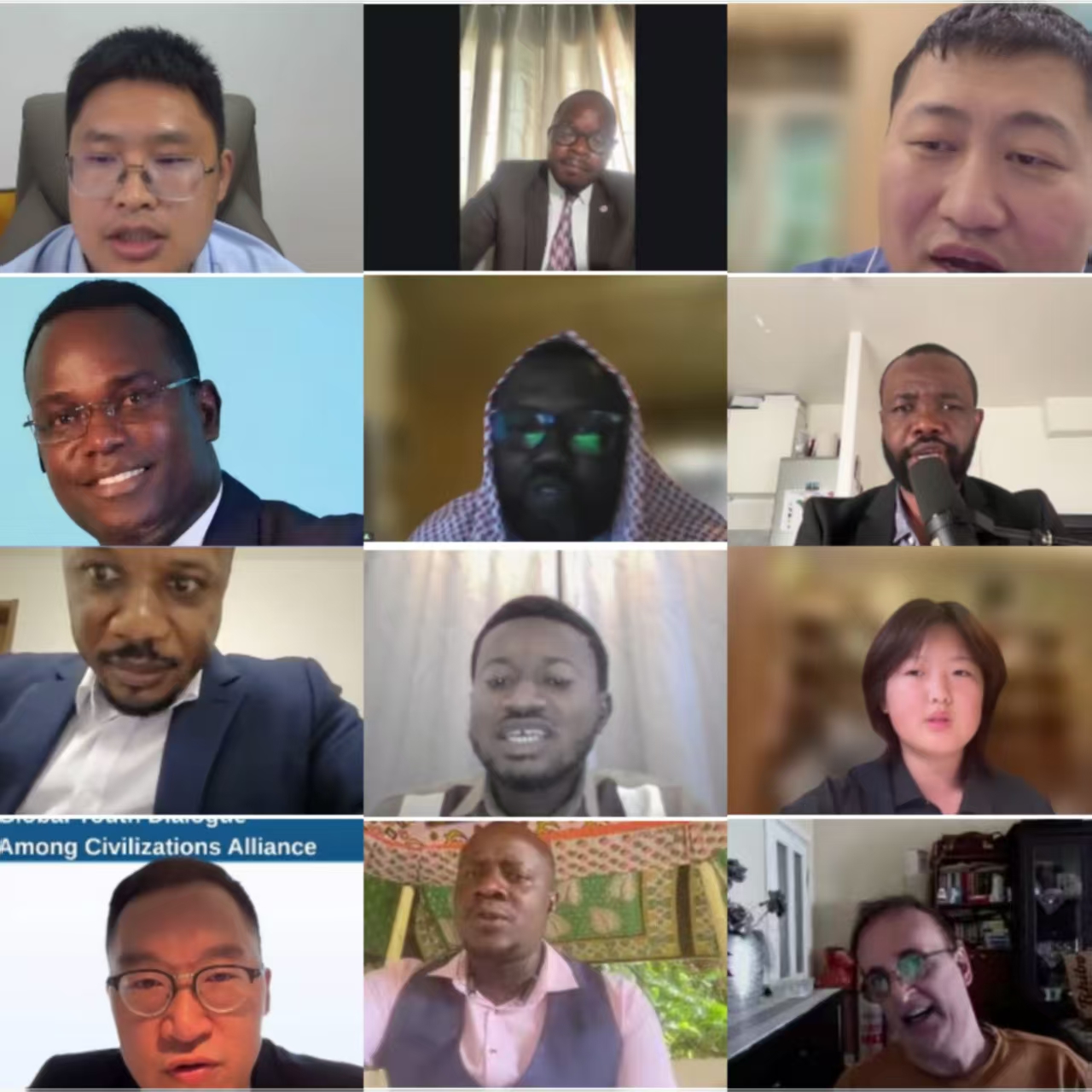
Bringing together educators, scholars, cultural practitioners, youth representatives, and institutional partners from Africa, China, Europe, and other regions, the dialogue provided an inclusive platform to discuss how digital technologies and Open Educational Resources (OER) can support cultural and arts education in Africa.
Culture, Education, and the Future of Africa
In his opening remarks, Dr. Emmanuel Fred, President of the Liberia Academy of Sciences, Board Chairman of Africa Open University, and Assistant Minister for Operations at the Ministry of Posts and Telecommunications of Liberia, welcomed participants and emphasized the importance of strengthening cultural education, digital integration, and institutional cooperation in Africa.
Dr. Fred further delivered a presentation on policy pathways for cultural innovation in Liberia, highlighting the richness of Liberia’s oral traditions, music, dance, crafts, storytelling, and indigenous knowledge. He noted that many cultural assets remain undocumented and called for stronger collaboration among educational institutions, cultural bodies, communities, youth organizations, and public stakeholders to support cultural preservation and education.
Representing the Global Youth Dialogue Among Civilizations Alliance, Mr. Jing Zhang emphasized that openness, heritage, and innovation should be understood as a shared responsibility. He called attention to the need to digitize heritage without losing its cultural meaning, to ensure that innovation serves inclusion, and to make cultural and arts education accessible to young people, including those in rural and underserved communities.
Digital Innovation Should Amplify, Not Replace, Heritage
Prof. Yuguang Zhou from the College of Engineering of China Agricultural University shared remarks from the perspective of sustainable technology and international cooperation. He noted that science, education, culture, and development are closely connected, and introduced ongoing cooperation in renewable energy, bioenergy, sustainable agriculture, and capacity-building. He also expressed interest in exploring future cooperation with Africa Open University to support renewable energy technology training for African participants.
A scholar joining from Paris contributed reflections on the importance of youth-centered innovation and the role of OER in expanding access to African cultural and artistic heritage. The speaker emphasized that technology should not replace traditional cultural transmission, but should help preserve, share, and renew Africa’s cultural resources in ethical and inclusive ways.
Dr. V. Marshall Sambolla, Second Vice President of Africa Open University and Secretary General of the Liberia Academy of Sciences, spoke on culture and arts education in Africa before the technology age. His remarks reflected on traditional African education, oral knowledge, storytelling, community learning, respect for elders, and the role of culture in shaping identity and social responsibility. He also noted that modern technology can support communication and learning, while societies should continue to value traditional wisdom and local educational practices.
From Ghana, Mr. Stephen Essien addressed the relationship between cultural identity and modernization. He observed that as African societies become more digital and globally connected, cultural and arts education should help young people remain connected to their languages, histories, artistic expressions, and community values. He emphasized that technology should be used as a tool for cultural preservation and creative confidence, rather than as a force that weakens local identity.
From Kenya, Dr. Clinton Mutali Lichuma discussed the relationship between culture, governance, community knowledge, faith traditions, and digital education. He highlighted the importance of documenting indigenous knowledge with community consent, supporting local languages, strengthening teacher training, and ensuring that digital cultural resources are designed with communities rather than imposed upon them.
Youth Voices and Intercultural Learning
A youth reflection was delivered by WEI FIONA, a Grade 8 student from an international school in Beijing. Speaking as a young learner, she shared how openness, heritage, and innovation can help young people better understand different cultures and contribute to intercultural dialogue.
She noted that students can take practical actions such as creating digital cultural exhibitions, producing short videos about intangible cultural heritage, joining online exchanges, and listening to stories from older generations. Her remarks reflected the belief that peace and understanding can begin when one young person listens carefully to another person’s story.
AOU’s Role as an Open Platform for Africa and the World
As an emerging open and inclusive educational platform, Africa Open University views cultural and arts education as an important part of its broader mission to support learning, dialogue, and capacity-building across Africa. The dialogue highlighted AOU’s role in connecting African institutions, international partners, scholars, youth communities, and development-oriented initiatives.
Participants agreed that the digital future of cultural and arts education in Africa should be guided by three principles:
- Openness — expanding access to cultural and educational resources;
- Heritage — respecting, preserving, and transmitting Africa’s cultural memory;
- Innovation — using technology responsibly to support education, creativity, and cooperation.
The discussions also pointed to future areas of cooperation, including OER development, digital cultural archives, teacher capacity-building, youth exchange, renewable energy training, academic collaboration, and community-based cultural documentation.
Looking Ahead
The event concluded with a shared understanding that Africa’s cultural heritage is not only a treasure of the continent, but also an important contribution to the shared heritage of humanity. Africa Open University will continue working with partners to support inclusive education, intercultural dialogue, and practical cooperation in areas that connect culture, education, youth development, and sustainable development.
As part of future cooperation, partners also expressed interest in continuing China-Africa and international academic exchange. A China-Africa Young Scientists Academic Exchange is planned to be held on 11 November 2026 in Wuhan, Hubei Province, China, offering another platform for young scholars, experts, students, and institutions to continue dialogue and cooperation.
Through this international dialogue, Africa Open University reaffirmed its commitment to supporting educational innovation, cultural understanding, and international partnership in a way that respects local contexts, values cultural diversity, and encourages young people to participate in shaping a more open and inclusive future.